

The group sessions of “The Heart of the Museum” have concluded, a pioneering project that integrates art and cardiovascular rehabilitation
The group sessions of “The Heart of the Museum” have concluded, a pioneering project that integrates art and cardiovascular rehabilitation
Share


Developed jointly by the Hospital Clínic and the MNAC, this program combines art, reflection, and emotional support to improve the recovery of people who have survived sudden cardiac arrest, within the framework of a clinical study that will evaluate its impact.
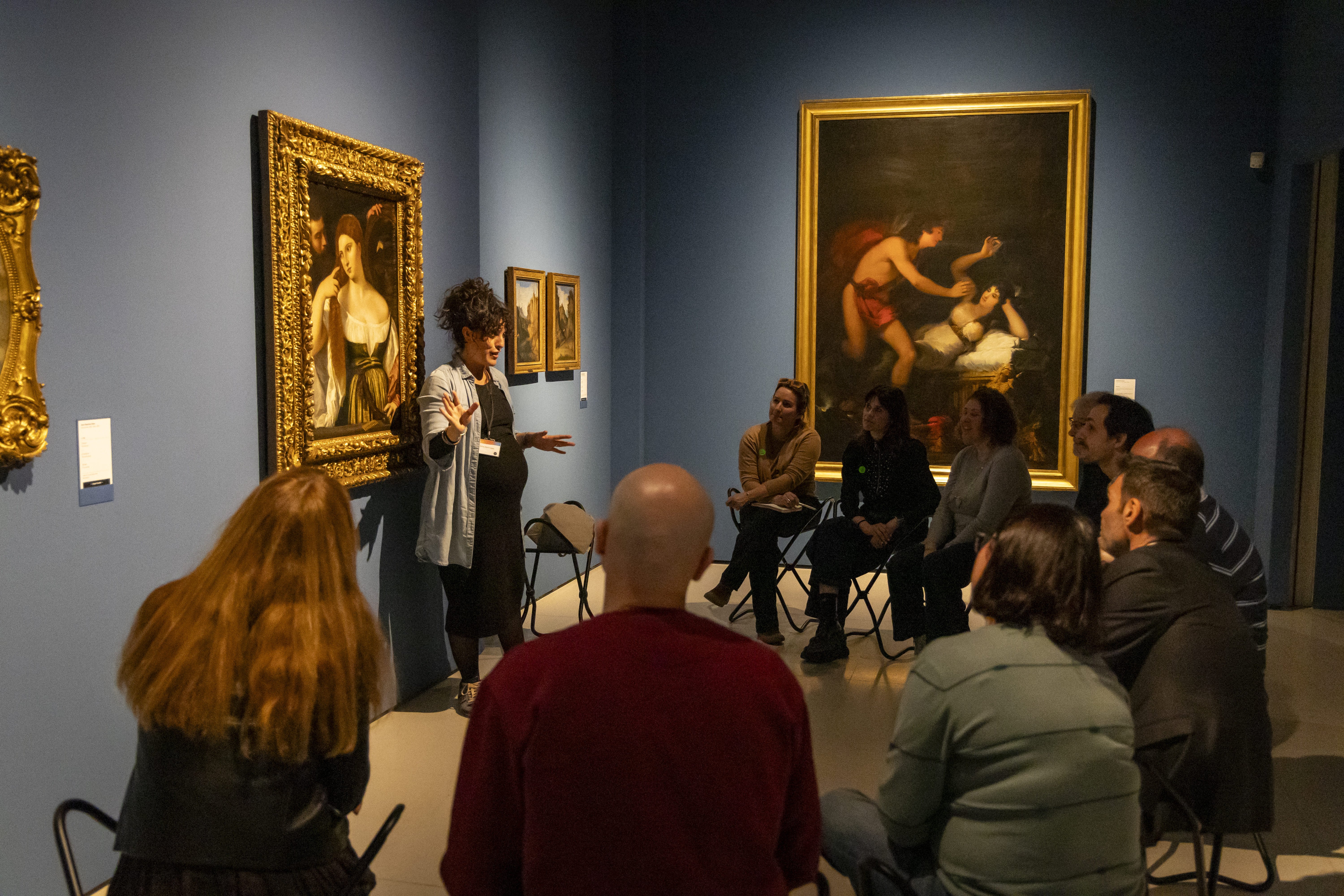
The group sessions of the project “The Heart of the Museum” have concluded after eight weeks of joint work between professionals from the National Art Museum of Catalonia (MNAC) and the Cardiology Department of Hospital Clínic Barcelona.
This is an innovative initiative that uses visual arts, creativity, and the museum environment as complementary tools to enhance the emotional well-being of people who have survived a recovered sudden cardiac arrest.
Through a randomized clinical trial, the research team aims to determine whether the arts can serve as a complementary tool to reduce the emotional impact of the experience and support the physical, social, and psychological rehabilitation of affected individuals.
“After overcoming a period of illness, participating in The Heart of the Museum project has been especially meaningful for me. It has been much more than a collaboration: it has represented a way to reconnect, to regain confidence, and to feel useful and motivated again,” explains Joan, one of the patients who took part in the sessions. “I experienced the project with great intensity and gratitude, valuing every moment and every lesson. Without a doubt, it has helped me close a difficult chapter and open a new one with greater strength, enthusiasm, and purpose,” he adds.
A project for people who have experienced an extreme life event
Sudden cardiac arrest is an unexpected event that affects thousands of people every year. Those who survive it often undergo prolonged hospitalizations and invasive medical procedures. Even after physical recovery, it is common for them to experience anxiety, fear, emotional vulnerability, and difficulties in returning to everyday life.
“The Heart of the Museum” is specifically designed for this group. Its objectives include:
-
Reducing depressive symptoms
-
Improving emotional well-being and quality of life
-
Promoting adherence to treatment
-
Facilitating social and professional reintegration
-
Encouraging cultural habits as a long-term well-being resource
Eight weeks of creative sessions at the MNAC
The activities were carried out in group format within the MNAC’s galleries and spaces, guided by cultural mediators and healthcare professionals from the Clínic. Each of the 10 sessions addressed a key aspect of rehabilitation through art:
-
Weaving connections: support networks and trust
-
Renewing the canvas: redefining health and well-being
-
From palette to plate: nutritional advice through art
-
Personal narrative: art, creativity, and self-reflection
-
Walking as an act of creation
-
Reflections: portraits and self-portraiture
-
Symbolic portrait
-
Body and movement
-
Points of view: inner and outer landscapes
-
The feminine trace: identities and social challenges
This group format created a safe, supportive environment among participants—particularly valuable for individuals who share the experience of having faced a life-threatening event.
“This is a different kind of research project compared to what we are used to: it is a randomized clinical trial with an art-based intervention that includes talks and education on health, nutrition, exercise, gender perspective, and psychology,” explains cardiologist Rut Andrea. “From the professionals’ perspective, we are highly motivated and experience each session with intensity and emotion. We are all learning and enjoying the experience,” she adds.
A clinical study to measure the impact of the art-health connection
Unlike other cultural programs, “The Heart of the Museum” is designed as a randomized clinical trial in which participants are divided into two groups: one receives the intervention, while the other follows the standard clinical care process.
Using internationally validated scales, the research team evaluates:
-
Depression and mood
-
Emotional well-being
-
Adherence to pharmacological treatments
-
Quality of life
-
Social and occupational reintegration
This approach will help determine whether the arts can act as an adjunct therapy, complementing traditional medical treatment.
A collaboration that reinforces the museum as a health-promoting space
For the MNAC, the project reinforces the idea of the museum as a health-promoting environment: a space that fosters calm, reflection, and connection with oneself and others. Specialized educators have incorporated visual thinking techniques, mindfulness, movement, and artistic creation to activate the museum’s artworks from a therapeutic perspective.
According to Guillem d’Efak, Head of Community Action, Public Programs, and Communication at the MNAC, “the museum becomes a space for health, where artworks, pathways, and mediation generate experiences that positively impact people’s well-being. It is configured as an environment of care and connection, integrated into the healthcare system, capable of supporting recovery processes through artistic experience.”
Both the Clínic and MNAC teams agree that the arts can be a powerful complement in the emotional support of patients who have experienced critical events, contributing to more humanized healthcare and expanding recovery resources.
The project is part of Hospital Clínic’s Arts in Health Program, which incorporates culture as a health asset with the aim of promoting the emotional well-being of patients and professionals.
This program is coordinated by the Clínic’s Social Responsibility Area from a hospital humanization perspective and brings together various initiatives in partnership with leading cultural institutions.