

Displaying 1 - 4 of 4

![image for: Doménikos Theotokópoulos (El Greco) - Sant Pere i sant Pau - Entre 1590-1600 [1]](https://www.museunacional.cat/sites/default/files/styles/resize_500x500/public/images/art_piece/first_gallery/34377/005083-000_093965.jpg "Doménikos Theotokópoulos (El Greco) - Sant Pere i sant Pau - Entre 1590-1600 [1]")
![image for: Doménikos Theotokópoulos (El Greco) - Sant Pere i sant Pau - Entre 1590-1600 [2]](https://www.museunacional.cat/sites/default/files/styles/resize_500x500/public/images/art_piece/first_gallery/34377/005083-000_093964.jpg "Doménikos Theotokópoulos (El Greco) - Sant Pere i sant Pau - Entre 1590-1600 [2]")
![image for: Doménikos Theotokópoulos (El Greco) - Sant Pere i sant Pau - Entre 1590-1600 [3]](https://www.museunacional.cat/sites/default/files/styles/resize_500x500/public/images/art_piece/first_gallery/34377/005083-000_093967.jpg "Doménikos Theotokópoulos (El Greco) - Sant Pere i sant Pau - Entre 1590-1600 [3]")
![image for: Doménikos Theotokópoulos (El Greco) - Sant Pere i sant Pau - Entre 1590-1600 [4]](https://www.museunacional.cat/sites/default/files/styles/resize_500x500/public/images/art_piece/first_gallery/34377/005083-000_093965_0.jpg "Doménikos Theotokópoulos (El Greco) - Sant Pere i sant Pau - Entre 1590-1600 [4]")
![image for: Doménikos Theotokópoulos (El Greco) - Sant Pere i sant Pau - Entre 1590-1600 [5]](https://www.museunacional.cat/sites/default/files/styles/resize_500x500/public/images/art_piece/first_gallery/34377/005083-000_093964_0.jpg "Doménikos Theotokópoulos (El Greco) - Sant Pere i sant Pau - Entre 1590-1600 [5]")
Painting
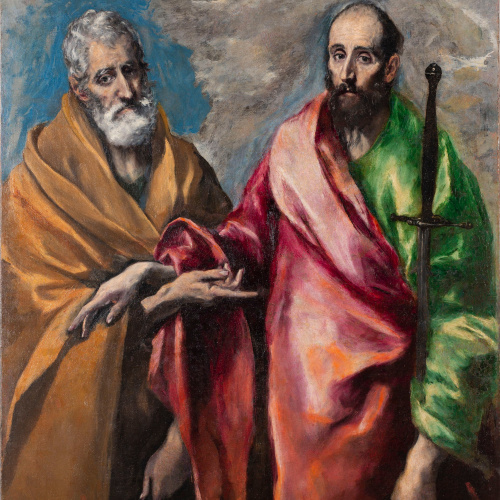
After starting as a painter on the Island of Crete, El Greco evolved towards the modern style of art from Venice and later settled in Toledo. The central theme of this picture is the meeting of the two Apostles Peter and Paul, who had been in disagreement. This is hinted at in the greeting with their hands, which cross without actually touching. An ageing, weary Peter seems to make a gesture of surrender or recognition towards Paul, who proudly holds his attribute, the sword. Behind them can be seen a magnificent scene of clouds, with an opening of blue sky that emphasises their saintly halo. This work demonstrates the great narrative and chromatic wealth of the Cretan master's art.
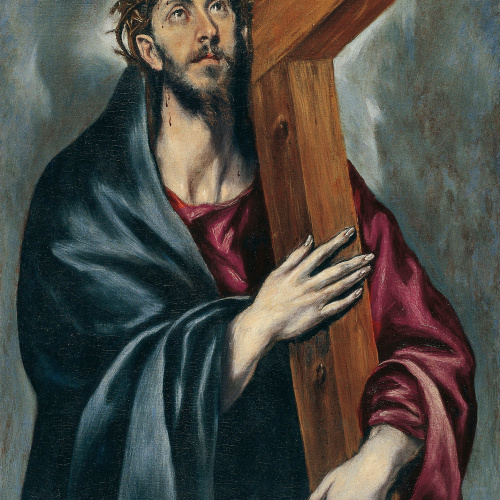
Painting
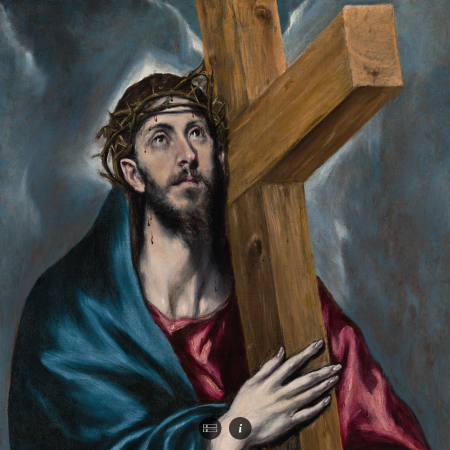
The cross that Christ bears is not an instrument of martyrdom but a symbol of his triumph over death. The face expresses not pain but serenity and a radiant faith in eternal life. This iconographic theme was inspired by De Imitatione Christi, The Imitation of Christ, published in the first quarter of the fifteenth century, which sought to instruct the souls of the faithful in Christian perfection. The work is notable for the characteristic brushstrokes with which the painter uses colour to model the volumes and distorts the bodies to reflect the spiritual longing of the characters.